Exploring the Differences: Marquee vs. Gazebo
Let’s explore the difference between a marquee and a gazebo. When planning an outdoor event or looking to enhance a garden, you might consider adding a structure such as a marquee or a gazebo. Both offer shelter and define space, but they serve different purposes and suit different environments. Understanding the distinctions between a marquee and a gazebo can help you make the best choice for your needs.
What is a Marquee?
A marquee is a large, often temporary structure used primarily for events such as weddings, fairs, and festivals. It is typically made from heavy-duty canvas or PVC and designed to protect against the elements, providing a spacious, flexible venue for large gatherings.
Characteristics of a Marquee:
- Size and Shape: Marquees can vary significantly in size, accommodating anything from a small group of 20 people to large gatherings of hundreds. They are usually rectangular or square but can also be found in hexagonal or octagonal shapes.
- Flexibility: One of the key features of a marquee. It can be erected on almost any flat surface, including grass, concrete, and decking. This makes it an ideal choice for event planners who need a versatile venue adaptable to different locations and scales.
- Setup and Takedown: Marquees are designed for relatively easy setup and takedown, though they typically require a team to assemble due to their size and the weight of the materials.
- Uses: The primary use of a marquee is for events that require a temporary covered space. It serves as a blank canvas that can be decorated and arranged according to the specific requirements of the event, providing shelter from the sun, wind, and rain.
What is a Gazebo?
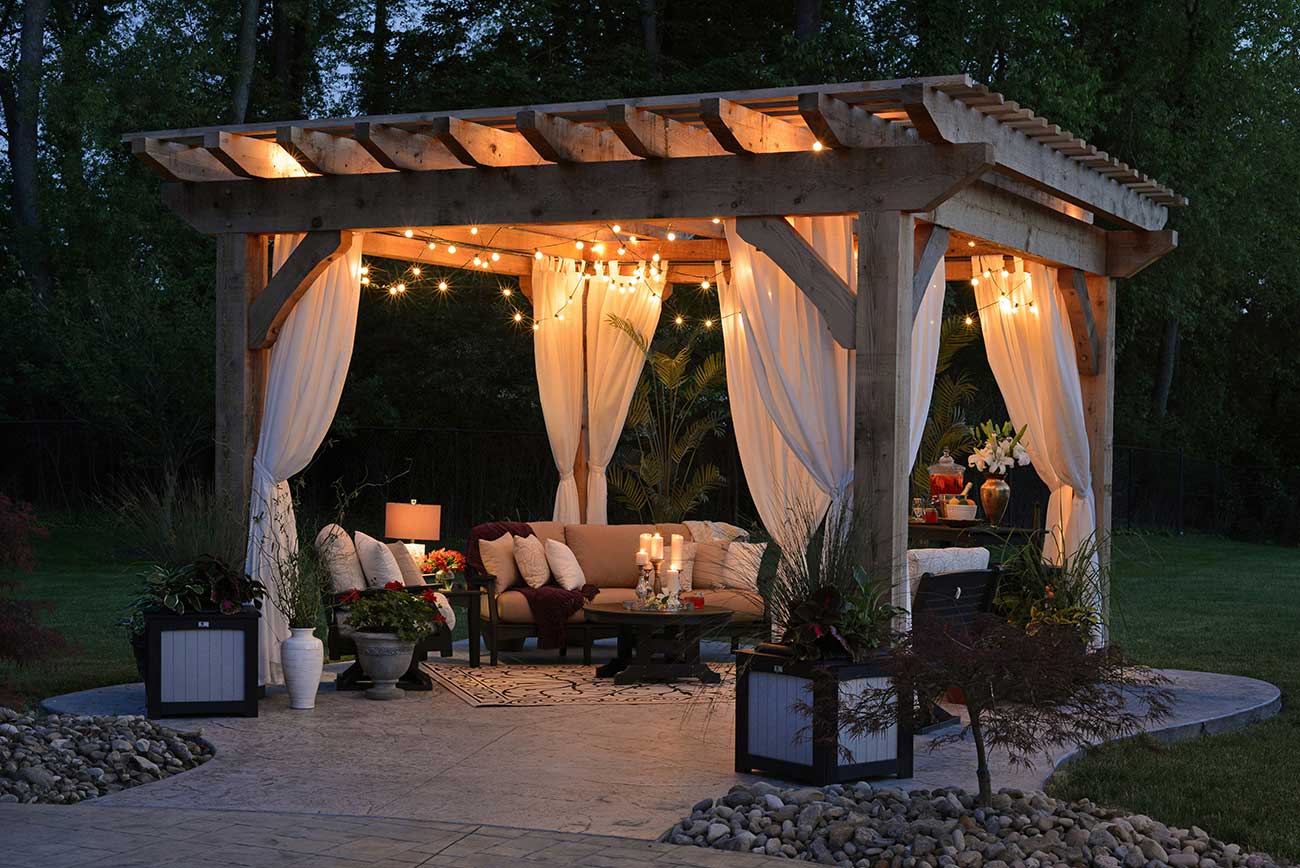
A gazebo is a freestanding, open-sided structure commonly found in gardens, parks, and other spacious public areas. It provides shade and shelter, as well as a decorative feature in a landscape. Gazebos are typically smaller than marquees and are meant for more permanent or semi-permanent installation.
Characteristics of a Gazebo:
- Design and Material: Gazebos are often more ornate than marquees, featuring decorative designs that can enhance the aesthetic of a garden or park. They are commonly made from wood, metal, or vinyl, with a roof and open sides, sometimes with railings or built-in benches.
- Durability: Unlike marquees, which are temporary, gazebos are designed to be durable and withstand the elements over a longer period. They can be anchored into the ground to provide a lasting structure that can be enjoyed year-round.
- Intimacy and Functionality: Gazebos are typically used as peaceful retreats in gardens or as scenic spots for small gatherings, romantic dinners, or quiet reflection. They can also serve as a bandstand or a sheltered area for outdoor entertainment.
- Customisation: While not as versatile as marquees in size and capacity, gazebos can be customised in design and materials to suit the landscape and the owner’s specific needs.
Differences Between Marquee and Gazebo
Purpose and Use: The fundamental difference lies in their usage. Marquees are primarily used to host events and provide temporary, large-scale shelter. In contrast, gazebos are more about enhancing a space aesthetically and providing a permanent or semi-permanent cosy shelter for smaller groups.
Structure and Installation: Marquees require assembly and are not meant to remain in place for long periods, making them less durable than gazebos. Gazebos, on the other hand, are built to be sturdy and lasting, often becoming a fixed part of the landscape.
Flexibility and Customisation: Marquees offer greater flexibility in terms of location and size, adapting to different event needs. Gazebos are more static, designed for specific locations and purposes, and while they offer fewer options in size and capacity, they can be highly customised in design.
Aesthetic and Design: Gazebos typically have a more decorative design, contributing not only function but also style to a garden or park. Marquees, while functional, are more utilitarian in appearance, designed for practicality and space rather than decoration.
Weather Resistance: Both structures provide protection from the weather, but the materials used in gazebos generally offer better long-term resistance to the elements compared to the temporary fabrics used for marquees.
Choosing between a marquee and a gazebo depends largely on the intended use, the need for mobility, and the duration of the setup. If you need a temporary structure that can accommodate a large number of guests for an event, a marquee is likely the better option. If you are looking for a more permanent addition to your garden that offers both function and style, a gazebo is ideal. Both structures, though different in design and purpose, offer unique solutions